Minneapolis does not look haunted. It looks like lakes, bike lanes and a very clean skyway. But scratch the surface of any city that built itself on flour dust, railroad money and a river that never stops, and you find the stories. We have spent years collecting them for the Candlelight Ghost Tour, and these are the places that come up again and again, from staff, from guests, and from the city’s own tourism office, which now keeps its own list of haunted places. Here is where to go, what is said to happen there, and how to see it for yourself.
Minneapolis City Hall: the man on the fifth floor
The pink granite fortress at 350 South 5th Street is the most haunted public building in town, and the story has a name. In 1898 John Moshik, convicted of a murder committed over a few dollars, was hanged inside the building, the only execution ever carried out there. Night staff and courthouse regulars have reported cold drafts, lights that flicker, doors that open on their own and a figure on the fifth floor ever since. The Municipal Building Commission, which looks after the building, cheerfully admits the place is “home to an abundance of local history and urban legend.” It is open weekdays and free to walk through; go for the rotunda, stay for the goosebumps.
300 Clifton: Gertrude and the cistern
The only haunted place in Minneapolis you can sleep in
The Eugene J. Carpenter Mansion in Loring Park, now the 300 Clifton bed and breakfast, has the city’s friendliest ghost. The story is that Gertrude, a lady’s maid to the Carpenters, drowned in the basement cistern during a fire in 1911 while trying to save the household’s valuables, and has been keeping an eye on the house ever since. Guests describe footsteps on the servants’ stair and humming from her old room; a rocking chair is said to move on its own. The mansion leans in: the basement is now Gertrude’s Cistern, a speakeasy lounge with a haunted movie room, and the house sells a Dead and Breakfast package with a ghost map and EMF meters. It is also the last stop on our Candlelight Ghost Tour, which is the only way to see the servants’ passages with a guide.
The Pillsbury Mansion: where the ghost tour begins
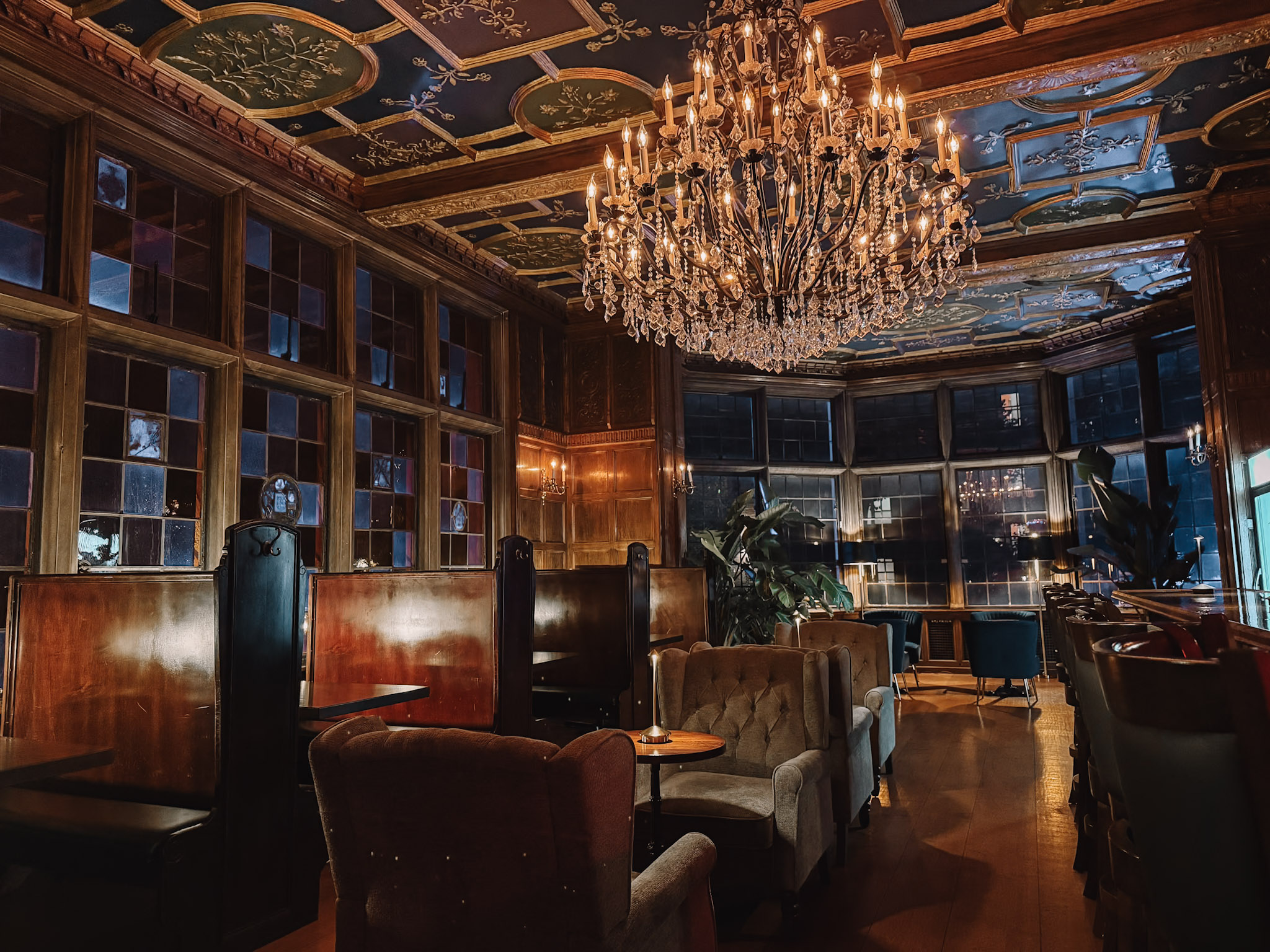
Our trolleys board at the Charles S. Pillsbury Mansion at 100 East 22nd Street, home of the Pillsbury Club, and it earns its place on this list on its own merits. The house is full of things older than Minneapolis: a fireplace that survived the Great Fire of London, oak from a Herefordshire manor, medieval glass in the windows. Old things carry stories, and the Club runs its own paranormal ghost hunts for anyone who wants to test them with equipment rather than nerves. Even sceptics admit the oak lounge at midnight, with the chandelier down low, is not a place you want to be alone in for long.
The Washburn A Mill: eighteen men and a flour explosion
On May 2, 1878, flour dust inside the largest mill in the world ignited and the Washburn A Mill blew apart, killing eighteen workers and taking neighbouring mills with it. The rebuilt mill burned again in 1991, and its shell is now the Mill City Museum, with Mill Ruins Park spreading out below it. Visitors have long described a low rumble in the ruins on still nights, and this is one of the stops where our guides let the history do the frightening. Daytime is for the museum, which is on our best museums list; dusk is for the ruins.
The Foshay Tower: does Wilbur still ride the elevators?
The obelisk on Marquette Avenue was the tallest building in the Midwest when it opened in 1929, months before the crash that ruined its builder, Wilbur Foshay. Legend says he jumped from it; the record says he died quietly of a stroke decades later, which has never stopped anyone from reporting his figure in the corridors or the elevators behaving oddly. The 31st-floor observation deck is open to the public, and the view alone is worth the ride, ghost or no ghost; the tower is on our best Minneapolis landmarks list for exactly that reason.
First Avenue: the woman in the green coat
Before it was the most famous nightclub in the Midwest, the building at 7th and First was an Art Deco Greyhound station. Staff and concert-goers have reported, since the 1980s, a woman in a green coat in one of the bathroom stalls, said to be tied to a death from the bus-station years, along with odd sounds in the DJ booth. It is a working venue, so the way to investigate is to buy a ticket; we cover the stage side of its story on our best live music page.
Two more, for the art lovers and the bar crowd
The Minneapolis Institute of Art, always free, publishes its own security-guard ghost stories and points visitors to the period rooms, the Connecticut Room and the Tudor Room, where most of the sightings cluster. And in the North Loop, Cuzzy’s, the dive bar with dollar bills for wallpaper, has a resident spirit the staff call Betsy, credited with moving condiments and hugging servers; if that is your kind of bar, our best dive bars in Minneapolis list has more.
How to see them all in one night
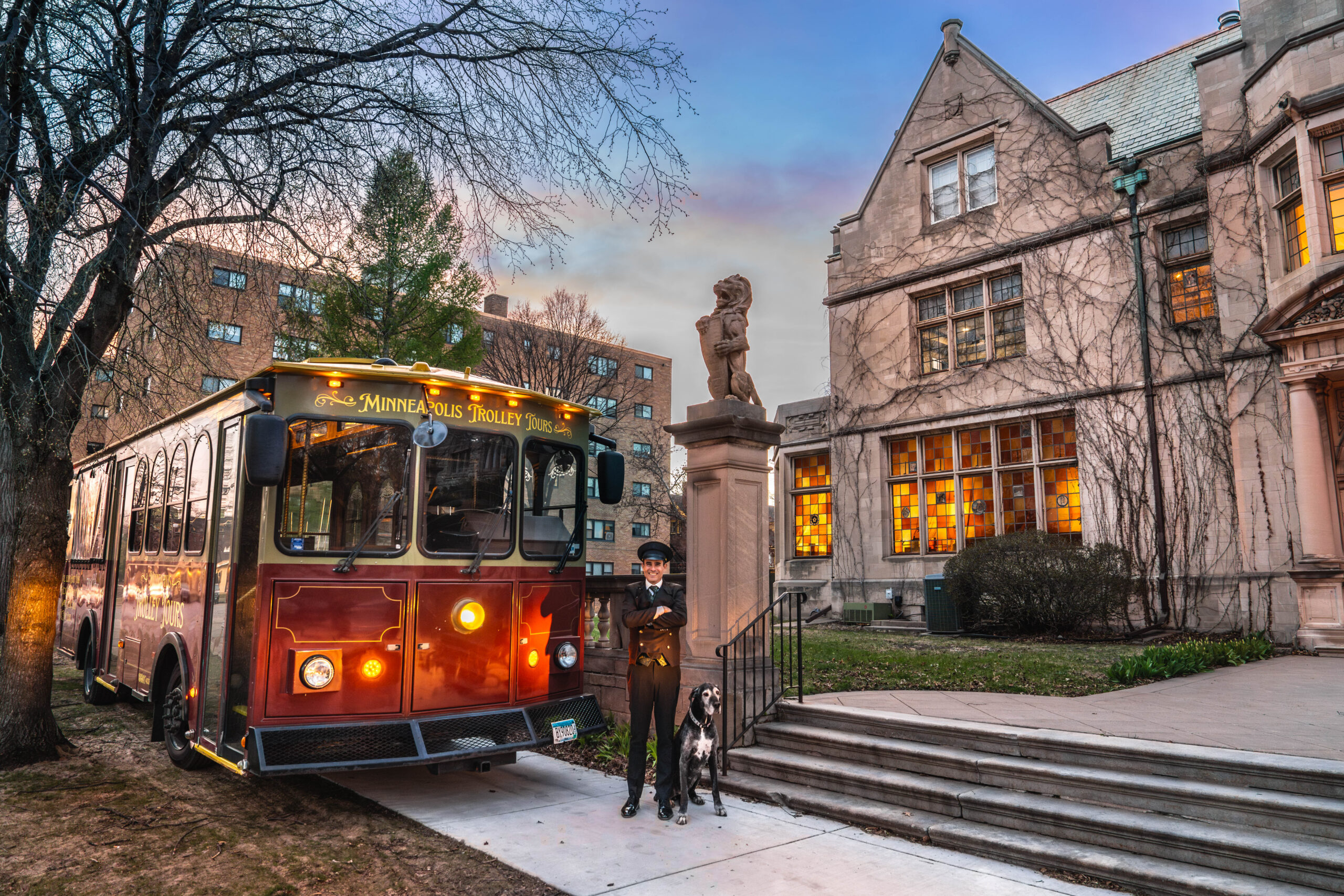
You could drive between these on your own, but you would miss the stories, and the stories are the point. The Candlelight Ghost Tour boards a heated vintage trolley at the Pillsbury Club, rolls past the documented locations with the newspaper clippings to prove them, and finishes inside 300 Clifton, through the secret doors, down to Gertrude’s Cistern. It runs hardest in October, which is exactly when it should. If your crowd prefers murders to ghosts, the True Crime Tour is the same trolley with a darker script, and we wrote up the true crime stories that really happened here. Groups can take the whole trolley through private rentals.
Staying a while? City Hall and the Foshay are both a short walk from Oakland’s on 9th, the furnished 1889 brownstone downtown, which is old enough to have stories of its own, and the only haunted place on this list you can book for the night is 300 Clifton. Still wondering whether any of this is real? We took that question seriously in Are Ghosts Real?, and the answer is: come and see. Check the calendar of tours and grab a seat before the October dates go.
Keep reading: Can you still ride a real streetcar in Minneapolis? The Como-Harriet Line’s fall and Halloween season