
Minneapolis has a reputation for being polite. It is also a city that, for the better part of the twentieth century, was quietly run by a bootlegger — and the evidence is still standing on street corners you walk past without noticing. If you have ever wondered what true crime stories actually happened here, rather than the ones that get invented for a podcast, here are the real ones, with the receipts.
The man who ran Minneapolis
Start with Isadore Blumenfeld, known to everyone as Kid Cann. The Minnesota Historical Society is blunt about his standing: in the annals of Minneapolis crime he occupies the place held by Al Capone in Chicago.
He was born in Romania in 1900, arrived in north Minneapolis as a toddler in 1902, and was first arrested at twenty. Prohibition made him. He moved from running stills to running speakeasies, and when Prohibition ended in 1933 he took control of the retail liquor trade in the city. State law said no person could hold more than one liquor licence; he held many, through relatives, corporations and bribery.
What is remarkable is how rarely anything stuck. Arrested in 1924 for the shooting of a cab driver — a grand jury called it accidental. Arrested in 1928 for the shooting of two police officers — released for insufficient evidence. Tried in Oklahoma in 1933 over the ransom from the Machine Gun Kelly kidnapping — of seven defendants, he was the only one acquitted.

The murder of Walter Liggett
The case that should have ended him was the killing of the journalist Walter Liggett in December 1935. Liggett had been publishing accusations that organised crime had reached into the state government. He was shot in an alley behind Second Avenue South. His wife was an eyewitness, and she identified Kid Cann as the shooter.
He produced an alibi: he had been in a barber’s chair on Hennepin Avenue. In February 1936 a Minneapolis jury acquitted him. It is one of the most consequential unresolved cases in the city’s history, and it is still argued over — including the theory, raised later by Liggett’s own daughter, that the gunman was somebody else entirely who happened to resemble him.
If you want to read the coverage yourself, the original front pages are digitised in the Minnesota Digital Newspaper Hub. There is something about seeing the headline set in 1936 type that no retelling matches.
How he was finally caught — and what it cost the city
The federal government got him the way it got Capone: sideways. Convictions came in 1959 and 1961, and the one that held was for attempting to bribe a juror, which he admitted. He served time, was paroled in 1964, moved to Miami Beach to work for Meyer Lansky, and died rich.
The 1959 charge is the one Minneapolis still lives with. He was tried, with others, over the dismantling of the Twin City Rapid Transit Company during the conversion from streetcars to buses. Once again, he was the only defendant acquitted. The city had run one of the great streetcar systems in the world; it does not any more.
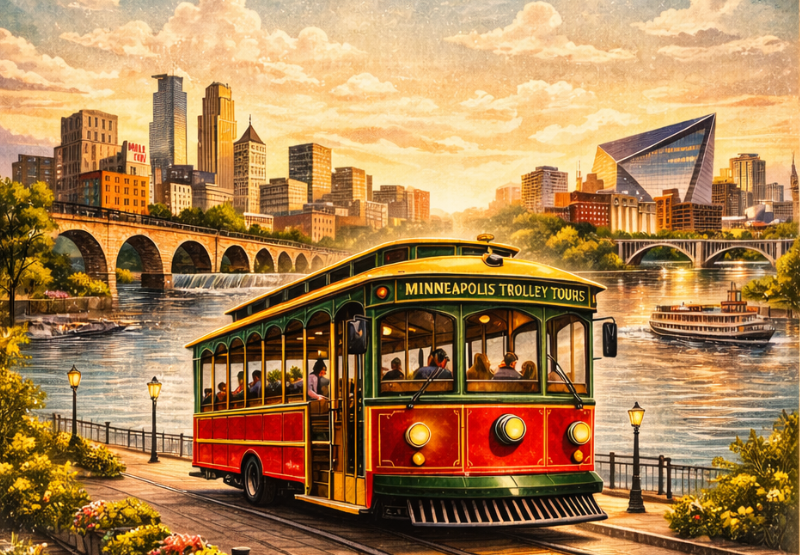
The block the mob saved
Here is the twist nobody expects. When the Gateway district was being demolished in the urban-renewal years, a stretch of old buildings survived — and not because preservationists fought for it. The syndicate wanted its own block left alone, and it had the leverage to make that happen.
That is why parts of the older bar block are still there at all. It is a genuinely uncomfortable piece of preservation history, and it is our favourite thing to point at from the trolley, because it complicates every neat story about how cities save their old buildings.
The Prohibition years also left the city a taste for a hidden room, which is why Minneapolis still does speakeasy-style bars better than most places its size — see also our wider list of the best bars in Minneapolis.
Where to see it for yourself
You can read all of this, or you can go and stand where it happened. Our Minneapolis True Crime Tour is an interactive trolley experience that runs through the real locations, and it is deliberately built as an investigation rather than a lecture — you work the clues as the trolley moves.
If your taste runs more to the supernatural than the documented, the Candlelight Ghost Tour visits the city’s most haunted sites aboard a trolley that is said to be haunted itself. Both are on the list of best tours in Minneapolis, alongside our roundup of the city’s landmarks. Larger parties should look at group tours and private rentals.
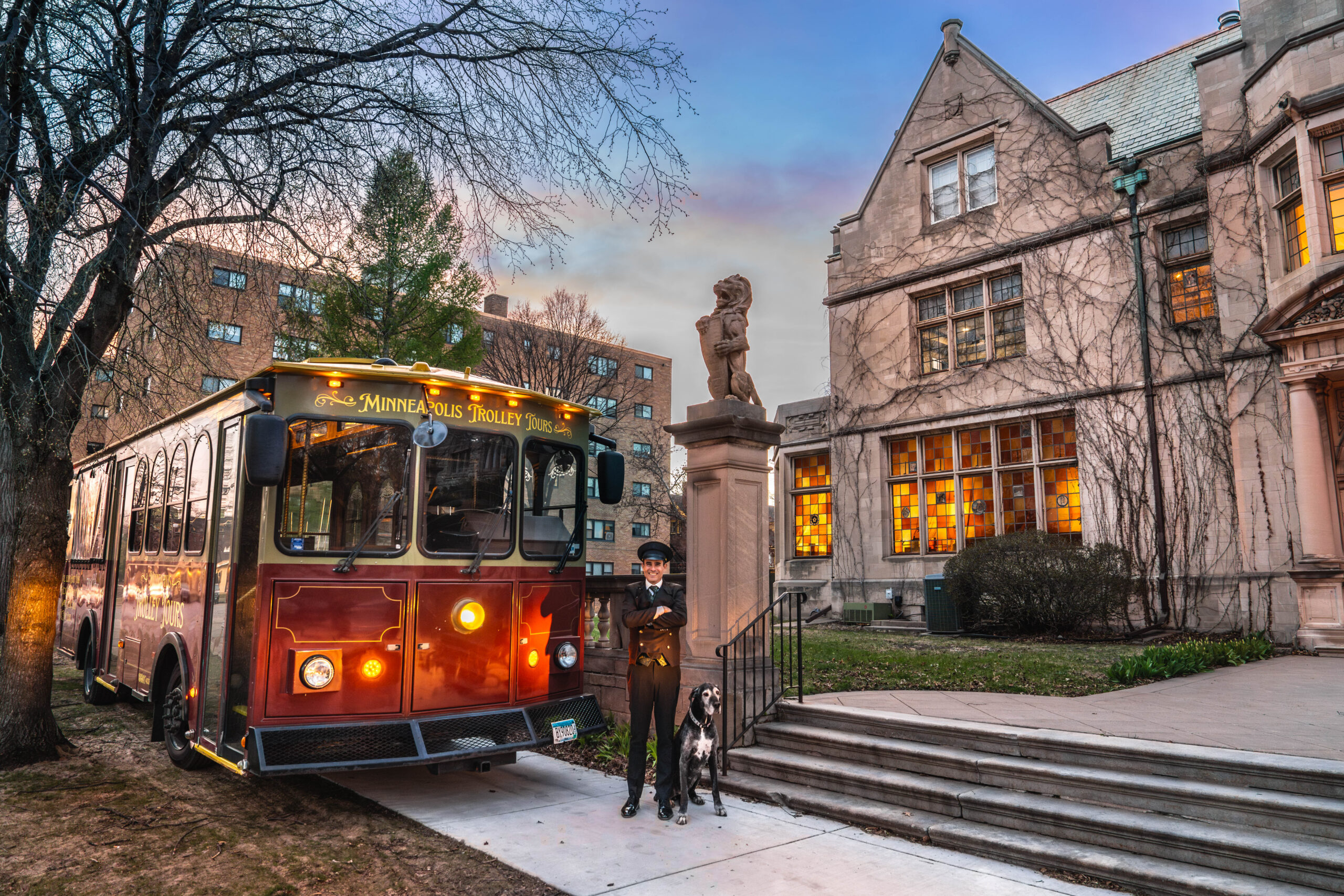
Make a night of it
Tours depart from the Pillsbury Club, inside the Charles S. Pillsbury Mansion — a Gilded Age house that was standing through every year of this story. It does cocktails and dinner by reservation, which makes it the obvious place to start or finish.
If you are coming in from out of town, 300 Clifton is a historic mansion bed and breakfast in Loring Park that you can actually sleep in, and Oakland’s on 9th has furnished downtown studios by the night, week or month if you are staying longer.
Minneapolis is a nicer city than it was in 1936. It is also a more interesting one than it lets on. Come and find out which corners it would rather you did not ask about.
Keep reading: Which Minneapolis mansions can you go inside during the holidays?