
Everybody who visits Minneapolis ends up with the same three photos: the Spoon, the Stone Arch Bridge, and something blurry taken through a car window on I-94. Nothing wrong with the first two — they are famous for a reason. But this is a city with a river gorge, a waterfall, a skyline that lights up gold at sunset and a stock of Gilded Age mansions most visitors never find.
We drive past all of it for a living. Here is where the good pictures actually are, roughly in the order we would take somebody.
1. The Stone Arch Bridge, and the two ways to shoot it
The Stone Arch Bridge is the shot, and there are two entirely different versions of it. From the bridge, you get St. Anthony Falls, the lock and dam, and the ruined mill walls. From the far bank, looking back, you get the bridge’s long curve with the whole downtown skyline stacked behind it — and at sunset the west-facing glass towers turn copper.
Most people only do the first one. Walk the extra ten minutes for the second. Start at the Minnesota Historical Society’s Mill City Museum, built inside the ruins of what was once the largest flour mill in the world, and work your way out onto the bridge from there.

2. The Minneapolis Sculpture Garden
Free, open every day from 6 am to midnight, and the largest urban sculpture garden in the United States — eleven acres holding more than sixty works. Spoonbridge and Cherry is the one everyone photographs, and it is genuinely worth it, but the garden is full of better-composed shots: Katharina Fritsch’s enormous blue rooster Hahn/Cock, the LOVE sculpture, and the Irene Hixon Whitney Bridge arcing over the freeway.
Go early. The garden faces the downtown skyline, and morning light puts the buildings behind the sculpture instead of blowing it out. Details and a map are on the Walker Art Center’s site.
3. Minnehaha Falls
A full-size waterfall inside the city limits, which still surprises people. The classic angle is from the stairs and the lower footbridge, shooting up at the falls. In winter it freezes into a blue column and becomes a completely different photograph. Park details are at Minneapolis Parks.
4. Loring Park and the footbridge
Loring Park was the first land the park board ever bought, back in 1883, and the pond reflects the downtown towers on a still morning. The Berger Fountain is a good foreground. From the north edge, the Irene Hixon Whitney Bridge carries you straight over to the Sculpture Garden, so these two are really one walk.
5. Lakewood Cemetery
This is the one nobody tells you about. Lakewood has been here since 1871, is an accredited Level 2 Arboretum, and its Byzantine Memorial Chapel is one of the most beautiful interiors in Minnesota. The gates are open every day, 8 am to 8 pm. Be respectful — it is a working cemetery, funerals happen, and that comes first — but for architecture and autumn colour there is nothing else like it in the city.
6. The mansions — including the insides
Minneapolis built an extraordinary amount of Gilded Age money into stone, and most of it is still standing along Park Avenue, Lowry Hill and around Washburn-Fair Oaks. The exteriors are free to photograph from the sidewalk. The interiors mostly are not open — which is exactly the gap our Gilded Age Mansion Tour exists to fill. It goes past eighteen of them and takes you inside two.
Two you can actually get into: the Pillsbury Club, in the Charles S. Pillsbury Mansion, whose rooms were shipped over from England and rebuilt here; and 300 Clifton, the Eugene J. Carpenter Mansion in Loring Park, which is the rare Minneapolis mansion you can photograph, tour and sleep in.
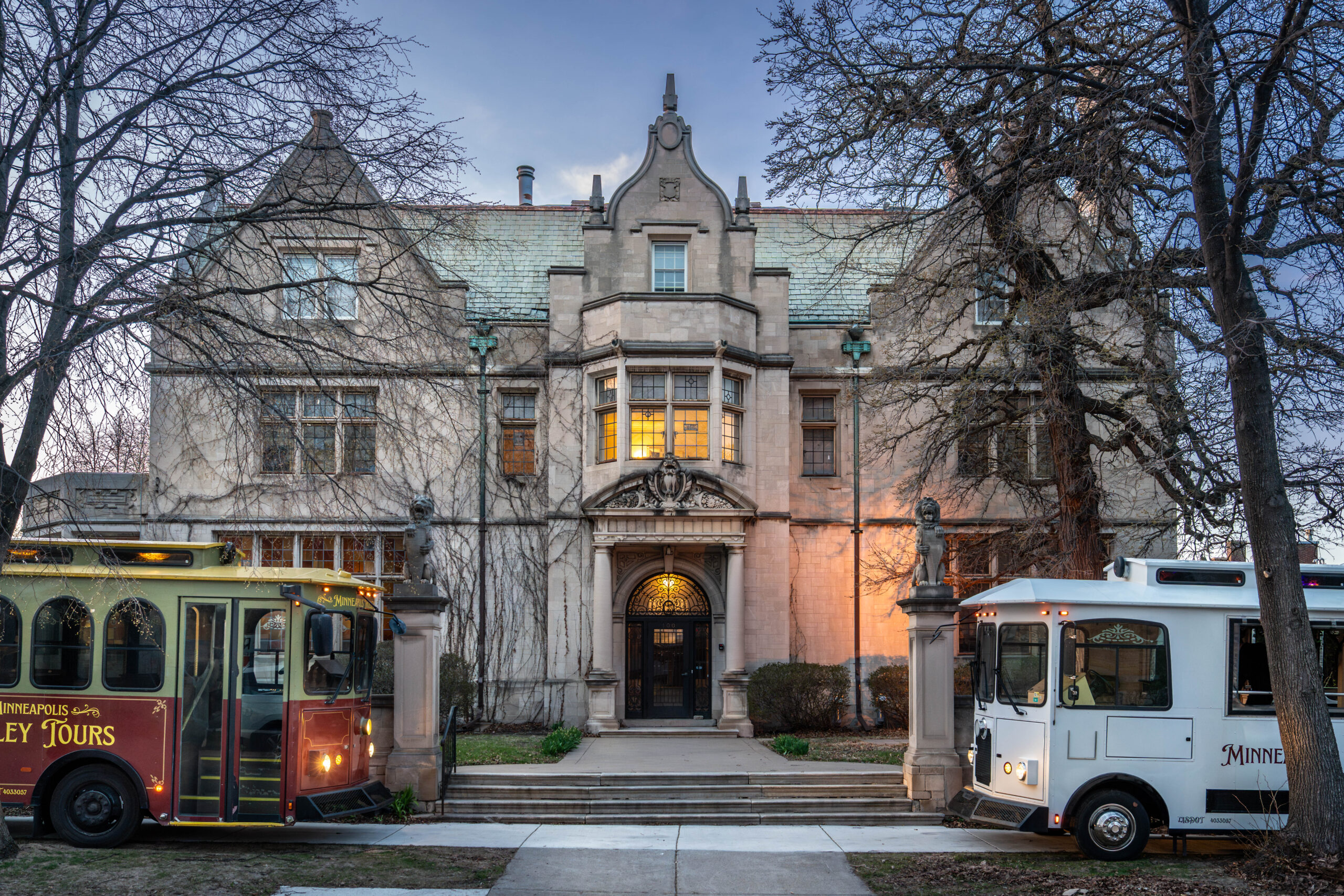
One practical note if you are shooting inside the Pillsbury Club: casual personal photos are welcome, but anything staged — engagement shoots, portraits, brand content, professional gear — needs a photography reservation booked in advance. Same rule at 300 Clifton. Ask first and it is easy; turn up with a tripod and a second shooter and it is not.
7. Rooftops, at the blue hour
Minneapolis has a genuinely good rooftop scene, and the twenty minutes after sunset — when the sky still has colour but the building lights are on — is when a phone camera can hold both. Our list of the best rooftops in Minneapolis is a decent shortlist to work through.

Where to point the camera indoors
Minnesota weather does not always cooperate. When it does not, the photogenic indoor options are mostly bars and dining rooms: our guides to the best speakeasies, the restaurants with the best atmosphere and the best coffee shops are all sorted more or less by how good they look. For green space in better weather, try the best parks in the city.
Doing it without a car
Nearly everything above is walkable, bikeable or on a bus line — and if you would rather not work out the logistics, the trolley does the driving. Our Candlelight Ghost Tour covers the city after dark, which is when a lot of these places look their best. Visitors staying a while — travel nurses, relocating families, anyone downtown for a month — often base themselves at Oakland’s on 9th, an 1889 brownstone on South 9th Street that is itself worth a frame.
More ideas: the best free things to do in Minneapolis, and what you actually see on a mansion tour.
Come ride along
The easiest way to hit half this list in an afternoon is from a seat on a vintage trolley with somebody else navigating. Book a tour, or ask about group tours and private rentals if you are photographing with friends.
Keep reading: if you are planning a December visit, here is how to choose between our Naughty and Nice holiday lights trolley rides.